Farid ud-Din Attar’s “The Conference of the Birds” is a renowned 12th-century Persian poetic allegory. This seminal work tells the story of birds embarking on a spiritual quest, ultimately seeking leadership and divine truth. It is considered one of the most significant pieces of Sufi literature.
Authorship and 12th Century Persian Poetry
The profound poetic allegory, “The Conference of the Birds,” was masterfully authored by the eminent Persian poet Farid ud-Din Attar. Born sometime during the twelfth century, Attar stands as a towering figure in the rich tapestry of Persian literature, particularly within the mystical Sufi tradition. His era, the 12th century, marked a golden age for Persian poetry, characterized by an exquisite blend of spiritual insight, intricate symbolism, and profound philosophical inquiry. Poets of this period often employed elaborate allegories to convey complex mystical doctrines and moral lessons, making their works accessible yet deeply layered, reflecting the intellectual vibrancy.
Attar’s contribution is unparalleled, with “Manteq at-Tair” (its original title) being widely recognized as his magnum opus. This masterpiece perfectly encapsulates the prevalent literary and spiritual currents of its time, deeply influencing subsequent generations. Twelfth-century Persian poetry was not merely artistic expression; it served as a vital vehicle for transmitting Sufi teachings and exploring the human soul’s arduous journey towards divine truth. Attar, through his eloquent verse, articulated these profound concepts with unparalleled grace, solidifying his reputation as one of the most influential mystics and poets of his age. His works continue to resonate globally, offering timeless wisdom rooted in a vibrant poetic tradition.

Manteq at-Tair: The Original Title
“Manteq at-Tair” is the original and authentic title for Farid ud-Din Attar’s celebrated poetic allegory, widely recognized in English as “The Conference of the Birds.” This profound Persian phrase translates to “The Language of the Birds” or “The Logic of the Birds,” instantly conveying the central concept of the narrative: a grand assembly where birds engage in significant discourse. As the author’s chosen designation, “Manteq at-Tair” provides direct insight into the 12th-century Persian literary and cultural context. The title itself is key to understanding the deep allegorical layers where avian communication symbolizes humanity’s spiritual quest.
Farid ud-Din Attar, the esteemed Persian poet, specifically chose “Manteq at-Tair” to emphasize the profound dialogue and collective reasoning that drives his narrative. It contrasts with a mere “conference,” highlighting the nuanced speech and wisdom sought through the avian voices. This original nomenclature is crucial for appreciating the poem’s sophisticated use of anthropomorphism to explore intricate Sufi doctrines. It firmly roots the masterpiece in its rich Persian heritage, underscoring its spiritual message and the importance of symbolic language in conveying profound mystical insights.
The Poetic Allegory’s Core Narrative
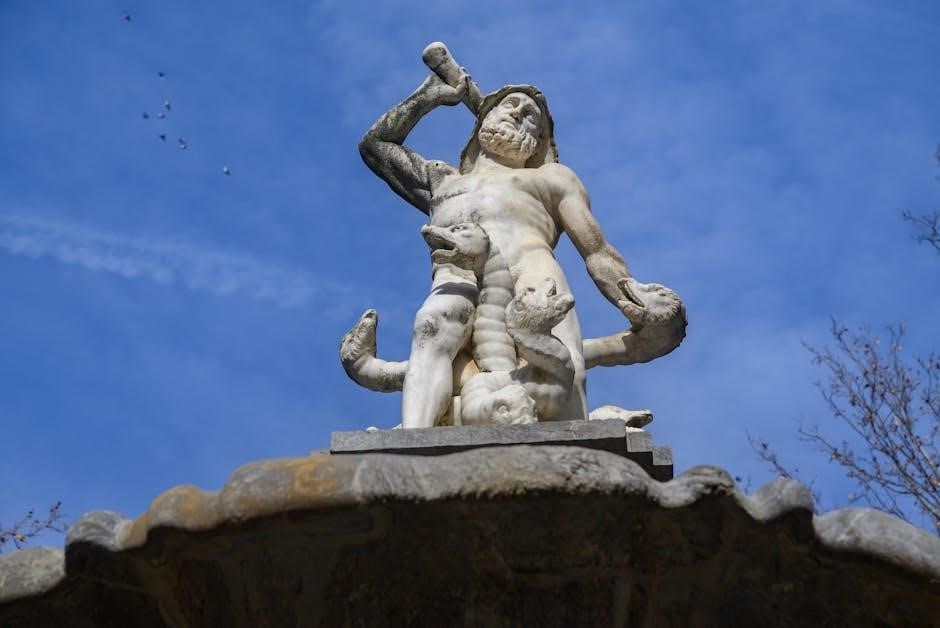
The core narrative of Farid ud-Din Attar’s “The Conference of the Birds” is a deeply symbolic poetic allegory. It commences with an extraordinary assembly of all the world’s birds, known and unknown, who gather to acknowledge their disunity and lack of a true monarch. Guided by the sagacious Hoopoe, acting as their spiritual mentor, they resolve to undertake an arduous and transformative pilgrimage. Their ultimate goal is to seek out the legendary Simorgh, a mythical bird believed to be their rightful sovereign and a profound symbol of divine truth and ultimate reality.
Throughout this epic journey, the narrative unfolds as various birds present their individual fears, doubts, and worldly attachments, each representing distinct human failings or virtues. The Hoopoe skillfully addresses these hesitations with parables and wisdom, urging them to transcend their limitations. The path involves traversing seven mystical valleys—Quest, Love, Knowledge, Detachment, Unity, Amazement, and Annihilation—each a challenging stage of spiritual purification. This perilous spiritual expedition culminates in a breathtaking and profound revelation, where the surviving birds discover the true essence of the Simorgh, leading to a transformative understanding of self and the divine, central to Sufi philosophy.
The Opening Assembly of All Birds
The opening of Farid ud-Din Attar’s “The Conference of the Birds” vividly describes the initial gathering that sets the entire spiritual journey in motion. All the birds of the world, both known and unknown, from every corner between the steadfast Earth and rolling Heaven, convened in a grand assembly. This momentous congregation marked the beginning of their collective quest for spiritual enlightenment and leadership. They expressed a deep-seated realization that they lacked a true sovereign to guide them, a unifying figure to bring order and purpose to their existence. This initial scene establishes the premise for the allegory, highlighting the birds’ existential dilemma and their shared desire for direction. The narrative emphasizes the universality of their assembly, underscoring that every creature, regardless of its unique note, plumage, or species, participated in this crucial deliberation. It is within this diverse gathering that the idea of seeking the legendary Simorgh first takes root, propelled by the urgent need for a leader and a spiritual path. The birds’ unanimous decision to embark on this arduous quest solidifies the foundation for the profound allegorical journey that follows, where their individual and collective spiritual evolution begins.
The Symbolism of the Simorgh
In Farid ud-Din Attar’s “The Conference of the Birds,” the Simorgh serves as the central and most profound symbol, representing the ultimate divine truth and the culmination of the Sufi mystical journey. The birds embark on their arduous quest, seeking this legendary king as their leader, believing it to be an external, all-powerful entity. Their pursuit across seven challenging valleys is a metaphor for the spiritual purification and transformation required to reach higher states of consciousness in Sufism.
The true symbolism of the Simorgh is revealed at the journey’s end. The name “Simorgh” itself, meaning “thirty birds” (si morgh) in Persian, holds the key. After enduring immense hardships, only thirty birds survive to reach their destination. There, they are confronted not by an external deity, but by a mirror reflecting their own collective selves. This profound realization signifies that they, in their unified and purified state, are the Simorgh. This powerful insight underscores the core Sufi principle of divine immanence: that the seeker and the sought are ultimately one. The Simorgh thus symbolizes self-discovery, the unity of individual souls within the divine, and the ultimate spiritual enlightenment achieved through self-annihilation and union with the Beloved. It is the divine essence found within, not merely an external object of worship.
Sufism and Islamic Mystical Doctrine

Farid ud-Din Attar’s “The Conference of the Birds” is profoundly a Sufi allegory, serving as a quintessential text for understanding the mystical doctrine within Islam. As a poem about Sufism, it necessitates a foundational grasp of this spiritual tradition, which is propounded by the mystics of Islam. Sufism emphasizes an inward, esoteric dimension of Islam, focusing on the purification of the heart and soul to achieve direct communion and knowledge of God. It is a path of spiritual enlightenment, seeking to transcend the material world through devotion, asceticism, and contemplation.
The birds’ arduous journey to find the Simorgh mirrors the Sufi devotee’s path, known as the ‘tariqa’. This journey involves confronting and overcoming numerous spiritual obstacles, often categorized into stages or ‘valleys’, each representing a distinct phase of purification and self-annihilation (fana). The poem brilliantly illustrates core Sufi concepts such as the quest for divine unity, the importance of a spiritual guide, and the ultimate realization that the divine is not external but inherent within the seeker’s purified self. Attar’s work, therefore, functions as a profound metaphorical exposition of the Sufi doctrine, guiding readers through the intricate spiritual landscape of Islamic mysticism.
R.P. Masani’s Abridged Version
R.P. Masani contributed significantly to the accessibility of Farid ud-Din Attar’s profound allegorical poem with his abridged version, published in 1924. Titled “The Conference of the Birds: A Sufi Allegory. Being an abridged version of Farid-ud-din Attars Mantiq-ut-Tayr,” Masani’s work aimed to distill the essence of the original Persian masterpiece. Attar’s “Manteq at-Tair” is a sprawling and intricate narrative, and an abridged edition serves to present its core spiritual journey and philosophical depth in a more condensed format.

This abridged version by Masani makes the complex themes of Sufism and the birds’ quest for the Simorgh more digestible for readers who might find the full extent of Attar’s epic daunting. By focusing on the essential narrative arc—the opening assembly, the journey through the valleys, and the ultimate realization of the Simorgh’s true nature—Masani preserves the poem’s allegorical power. It allows new audiences to engage with Attar’s rich symbolism and the profound Islamic mystical doctrine without losing the poetic and spiritual integrity that defines the original work. Such a rendition is particularly valuable for educational purposes or for those seeking a concise introduction to this classic.

Dave Holland’s “Conference of the Birds” Jazz Album
Dave Holland’s “Conference of the Birds” is a celebrated jazz album, recognized for its innovative compositions. This influential work showcases his distinctive bass playing and ensemble dynamics, becoming a significant entry in contemporary jazz history. Musical scores for this album are also available.

The Jazz Composition by Dave Holland

Dave Holland’s “Conference of the Birds” is a seminal jazz composition, a cornerstone in his acclaimed discography and modern jazz history. Released in 1972, its title track exemplifies Holland’s innovative approach to improvisation and intimate ensemble interaction. The composition features intricate melodic lines, sophisticated harmonies, and a compelling rhythmic drive, often with complex meters. Musical fragments like “q 3x 5 & 4” and “Dm” chords in available scores reveal meticulous construction. These details suggest a careful balance of written passages and extensive opportunities for collective improvisation. The work explores rich textures in a quartet or quintet, Holland’s bass acting as rhythmic anchor and prominent melodic voice. An “Eb Score” highlights formalized notation available for detailed study and performance. Celebrated for its intellectual depth and profound emotional resonance, it solidifies its place in the jazz canon. It embodies Holland’s vision for collaborative, adventurous musical expression, expanding jazz’s potential.

Musical Notation and Score Elements
Dave Holland’s “Conference of the Birds” showcases fascinating musical notation and score elements, reflecting its intricate jazz composition. Available scores, often found as free PDF downloads, reveal specific notational details for musicians. For instance, rhythmic figures like “q 3x 5 & 4” indicate complex groupings and time signatures, contributing to the album’s distinctive feel. Harmonic structures are frequently marked by chord symbols such as “Dm” for D minor, “Dm C”, and “Bb11” (B-flat 11), guiding improvisers through the harmonic landscape. The notation might also include dynamic markings and expressive symbols like “J J j” to convey specific articulations or phrasing. The term “Fine” typically marks the end of a piece or section. Furthermore, the existence of an “Eb Score” suggests a transposed version of the music, common for instruments like alto saxophone or trumpet, allowing them to read in their natural keys. These detailed scores are invaluable resources for musicians and scholars keen to analyze the piece’s structure, melodic contours, and rhythmic complexities, offering a deep dive into Holland’s compositional genius and the interplay between written music and improvisational freedom within his iconic work. Such elements underscore the precision and thought behind the album’s creation.

“Conference of the Birds” Resources in PDF Format
A wealth of “Conference of the Birds” resources is readily available in PDF format. This encompasses Farid ud-Din Attar’s allegorical poem and Dave Holland’s jazz album scores. Many are freely accessible online for download and direct reading.
Downloading Attar’s Poetic Allegory in PDF
For enthusiasts of classical Persian literature and Sufi mysticism, obtaining Farid ud-Din Attar’s poetic allegory, “The Conference of the Birds,” in PDF format is a straightforward process today. Numerous digital archives and online libraries host various editions of this 12th-century masterpiece. Readers can easily find complete translations, often with scholarly introductions, making the spiritual journey of the birds to the Simorgh accessible on any device. Furthermore, abridged versions, such as R.P. Masani’s 1924 rendition, are also commonly available as free PDF downloads, offering a concise yet impactful entry point into Attar’s rich narrative. These digital resources facilitate the study and enjoyment of this pivotal work, allowing anyone to delve into its allegorical depths. Searching for “Farid ud-Din Attar Conference of the Birds PDF” on major search engines typically yields a plethora of reliable sources. This accessibility ensures that the timeless wisdom and poetic beauty of Attar’s seminal text continue to inspire and educate new generations worldwide. Whether for academic study or personal enlightenment, the convenience of PDF downloads has democratized access to this spiritual epic, inviting readers to join the birds on their quest for ultimate truth.
Accessing Dave Holland’s Musical Scores as PDF
Musicians interested in Dave Holland’s “Conference of the Birds” can access its musical scores in PDF format. These resources are often freely available online, aiding detailed study of the composition’s intricate elements. Internet information confirms scores, including an “Eb Score,” are accessible for download or online reading. PDFs present precise musical notation, detailing harmonic progressions, rhythms, and instrumental parts. For instance, the provided snippet illustrates: “q 3x 5 & 4 .; . 5 & 4 .. Dave Holland. 5 & 4 .. ? 45 .. . Dm. Fine. & 34 . . 3 &4 amp; 34 . ? 34 . Dm. J J j. Dm C. B b 11.” Such digital scores are indispensable for students, educators, and professional performers. Obtaining these PDFs significantly aids analysis and interpretation of Holland’s iconic jazz work, fostering deeper musical understanding globally.
Reading Online PDF Versions
Reading online PDF versions of “The Conference of the Birds” offers unparalleled convenience for accessing both Farid ud-Din Attar’s revered poetic allegory and Dave Holland’s acclaimed jazz album scores. The modern web facilitates direct in-browser viewing, bypassing the necessity of downloading files to a personal device. This capability is explicitly highlighted in the provided information, stating that both Attar’s literary work and musical scores can be “read online for free.” For those delving into Attar’s 12th-century Persian masterpiece, this means immediate immersion into the spiritual journey of the birds and the profound Sufi doctrines it explores, including the opening assembly where “ALL THE BIRDS of the world;.. were assembled together.” Likewise, musicians can instantaneously review “Conference Of The Birds Eb Score” without local storage, examining its complex notation. Online reading platforms streamline the process for students, researchers, and enthusiasts alike, offering a seamless experience for perusing the text or musical figures, ensuring broad dissemination and ease of engagement with these significant cultural works globally. This facilitates a deeper, more immediate connection to their profound artistic and spiritual messages, fostering enhanced learning and appreciation.
